
Audience research
Part of Researching social commerce buyers by interviewing the transaction, not the ideal self
Defining a social commerce audience from recent buying behaviour rather than convenient stereotypes
Define a social commerce target audience in England from recent buying behaviour, clear geographic rules and evidence that can change a channel decision.
A useful target audience is the group whose behaviour can answer one trading decision.
For an English homeware seller, that might be customers who reached a delivery page after a creator video, ordered to England, then abandoned. This definition identifies a journey, evidence and a possible intervention.
What to take away
- Define an audience by the behaviour that answers one trading decision, not by copied demographic labels.
- Recruit purchasers, non-completers and returners from the same product group and period.
- Keep discount periods and stockouts visible, because price and availability may explain abandonment better than content.
- Collect only the personal data needed to compare the decision, following data-minimisation guidance.
- Summarise the audience as a behavioural rule with an eligible event, product, recency and England definition.
Start with the decision and event
Write one sentence containing the product, buying stage and intended choice. For example: "We need to learn whether first-time buyers leave because the product dimensions are unclear before we commission more short video." Then define the event that places someone in the sample.
England location rules
Delivery destination
- Best for
- Physical orders
- Weakness
- Gift or third-party address
- Do not use
- Merchant registered office
Customer residence
- Best for
- Some services
- Weakness
- Not always the buyer
- Do not use
- Creator's home
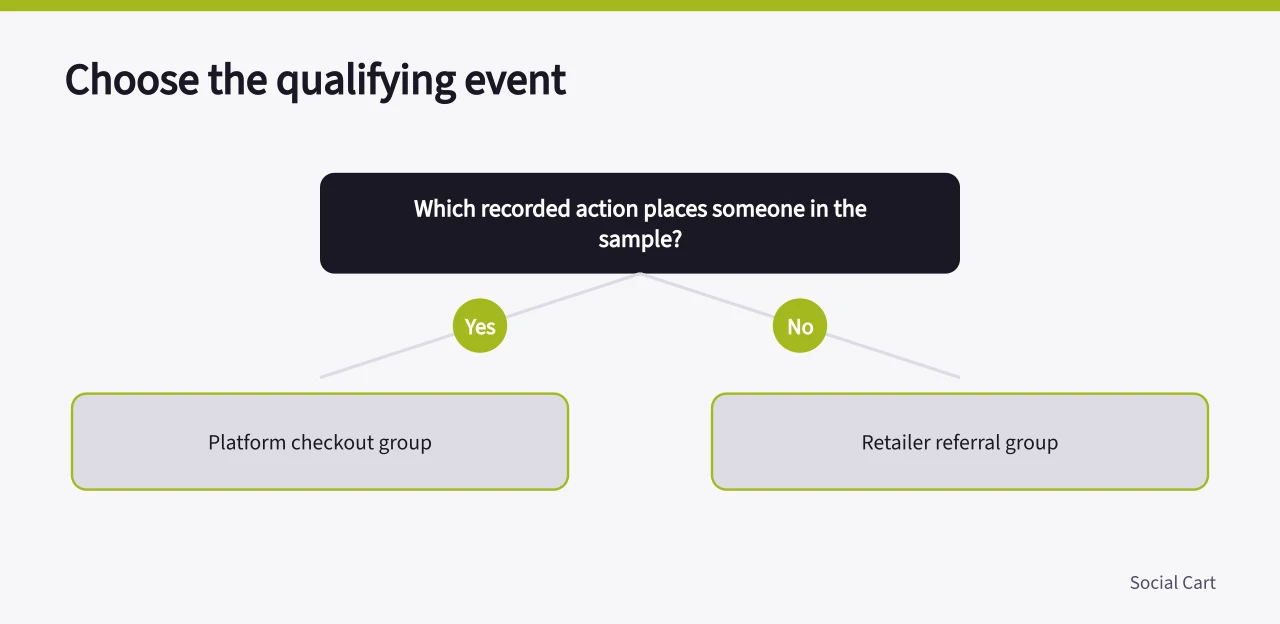
Possible events include opening a tagged product, asking a question during a live session, starting checkout, completing an order, cancelling or returning. Keep platform checkout and referral to the retailer's site in separate groups. A viewer who saw content but took no recorded action belongs to a different research frame.
For England, choose an operational rule. Delivery destination works for many physical orders. Customer residence may suit some services. State the field used and its weaknesses. The merchant's registered office and a creator's home do not locate the buyer.
Recruit contrasting cases
Begin with recent behaviour so people can describe a particular episode. Select purchasers, non-completers and returners from the same product group and period. Include first-time and existing customers, because prior familiarity can remove questions that a newcomer faces.
Recruit contrasting cases
Recruit
- Behaviour
- Purchasers, non-completers, returners
- Customer type
- First-time and existing
- Source
- Referral logs, orders, service contacts
- Window
- Set from buying cycle
Avoid
- Behaviour
- Only followers who comment
- Customer type
- Only existing customers
- Source
- Visible commenters only
- Window
- One fixed look-back
Do not recruit only from followers who comment. They are visible, but they may be unusually engaged. Referral logs, order records and customer-service contacts provide less vocal cases. Record who could not be contacted or declined, since absence can change the apparent pattern.
Set the recruitment window from the buying cycle; a low-cost accessory may be remembered clearly after a few days, while a considered furniture purchase may require a longer look-back.
Recruitment volume depends on the number of contrasting groups and the point at which interviews stop adding new reasons; set a target before recruiting and note when new themes stop appearing.
Keep campaigns, stockouts and major delivery changes visible in the sample record. If purchasers came from a discount period but abandoners did not, price and availability may explain more than the content route. Do not pool those cohorts.
Ofcom's Online Nation 2025 report describes UK online service use using several measurement sources. Its platform reach figures can expose a narrow recruitment frame, but they do not identify product buyers or supply England-only demand.
Ask about the completed journey
In interviews, reconstruct the last relevant purchase or abandonment. Ask what the person was doing before the product appeared, what they checked, what they believed about the seller, where they expected payment to occur and what stopped or reassured them. Show the post only after unaided recall.
Where a creator features, check whether the participant recognised the commercial relationship. The ASA's 2026 consumer research found that UK participants' confidence in spotting influencer advertising did not always match accurate recognition. It focused primarily on Instagram and TikTok, so it supports asking the question, not assuming the answer for every channel.
Protect the sample from convenient stereotypes
Collect only attributes required to compare the decision. Under the ICO's data-minimisation guidance, organisations should define the minimum personal information needed for their purpose. Exact postcode, income, ethnicity or health information should not become default fields because they might be useful later.
Keep the final audience rule usable by operations. A content producer needs to know which question to answer; an analyst needs an observable inclusion event; customer service needs to recognise the same failure after launch. If each team interprets the segment differently, narrow the wording before spending money on recruitment or media.
As a worked example, the rule might name the eligible event as a checkout start on a tagged homeware product and the product as the storage range from a creator video. Recency is 30 days, the England field is delivery destination, and exclusions are wholesale and staff orders.
End with the next test, such as adding a dimension demonstration before the product link and comparing completed, cancelled and returned orders. If the evidence comes from one retailer's customers, keep the conclusion at that level.
Before you act
- Write one sentence naming the product, buying stage and intended choice.
- Define the observable event that places someone in the sample.
- State the England rule and its weaknesses.
- Recruit contrasting cases, including first-time and existing customers.
- Set the recruitment window from the buying cycle.
Common questions
How should an England audience be defined?
Choose an operational rule. Delivery destination works for many physical orders, while customer residence may suit some services. State the field used and its weaknesses. The merchant's registered office and a creator's home do not locate the buyer.
Why should recruitment avoid followers who comment?
They may be unusually engaged.
What should interviews cover about a creator post?
Reconstruct the last relevant purchase or abandonment, then show the post only after unaided recall. Check whether the participant recognised the commercial relationship. ASA research found confidence in spotting influencer advertising did not always match accurate recognition, so ask rather than assume.